
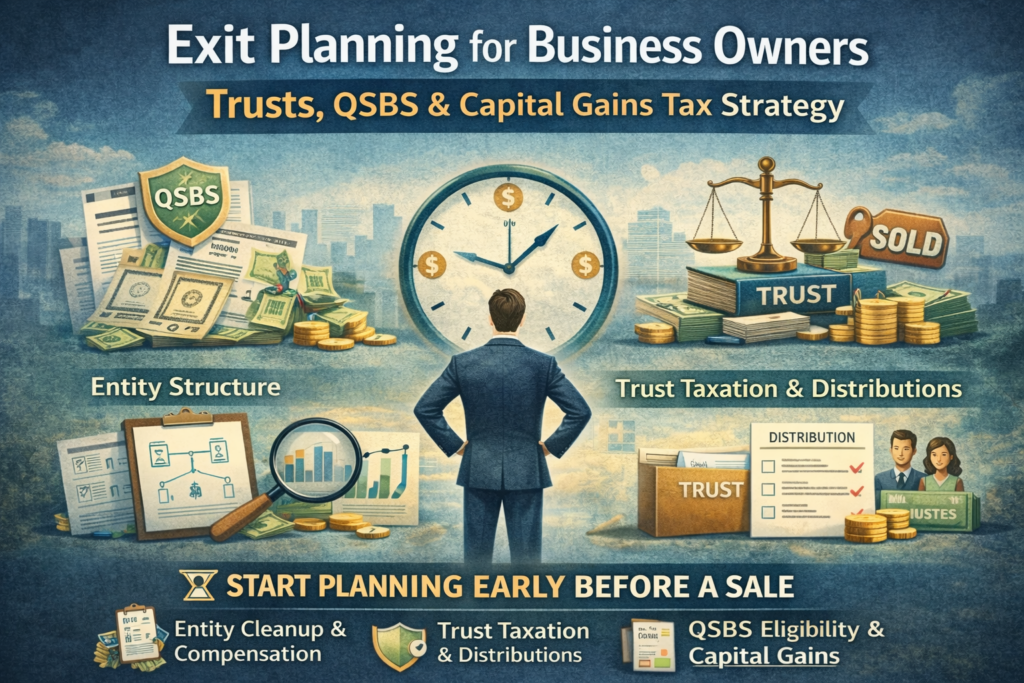
For business owners approaching a sale, the biggest tax mistake is waiting too long. Once a deal is on the table, most planning opportunities are already gone. Buyers are negotiating price, attorneys are drafting agreements, and the IRS becomes far less forgiving of last-minute “tax moves.”
That’s why the most effective exit planning happens three to five years before a liquidity event. This window allows owners to clean up their entities, restructure compensation, assess QSBS eligibility, and critically integrate trust and capital gains planning in a way that actually holds up.
Start With Entity Cleanup and Compensation
Before any sophisticated planning works, the foundation must be solid. This means reviewing entity structures, ownership records, shareholder agreements, and balance sheets. Old loans to shareholders, personal expenses running through the business, or poorly documented equity grants can all become red flags in diligence and can limit tax planning options.
Compensation is another key lever. Owners who are underpaying or overpaying themselves may distort EBITDA and trigger unnecessary payroll taxes or lost deductions. Normalizing compensation years ahead of a sale not only supports valuation but can also align income timing with broader tax and trust strategies.
QSBS and Capital Gains Planning Requires Patience
Qualified Small Business Stock (QSBS) can be one of the most powerful tools available potentially excluding up to $10 million of capital gains per owner. But QSBS eligibility depends on factors like entity type, asset tests, holding periods, and how stock was originally issued.
If QSBS is even a possibility, the clock needs to start early. Restructuring into a qualifying C corporation or cleaning up disqualifying assets too close to a sale often fails. Capital gains planning works best when it’s methodical, not reactive.
The Often-Missed Layer: Trust Taxation
Trusts are frequently part of an owner’s estate or succession plan but few owners understand how aggressively trusts are taxed.
Unlike individuals, trust tax brackets are highly compressed. A non-grantor trust reaches the top federal income tax rate and the net investment income tax at income levels that individuals don’t hit until much later. The same applies to capital gains.
This creates a planning dilemma:
Should income stay inside the trust, or should it be distributed to beneficiaries?
Distribution Planning: It’s About the Total Family Tax Picture
Distributing income from a trust doesn’t eliminate tax, it shifts it. When beneficiaries are in lower tax brackets, distribution can dramatically reduce overall tax exposure. This is often the case when beneficiaries are younger, have modest income, or live in lower-tax states.
On the other hand, retaining income in the trust may still be the right choice when beneficiaries are already in high brackets, or when asset protection, creditor concerns, or long-term control matter more than current tax efficiency.
There’s no universal answer. The decision must be made annually and especially in years leading up to a sale.
Trusts and a Business Sale: Plan Before the Gain Exists
If a trust owns equity in a business that is sold, capital gains may be taxed inside the trust unless planning is done before the transaction. In some cases, distributing appreciated assets or triggering distributable net income strategically can push gains to beneficiaries taxed at lower rates.
But timing is everything. Transfers made after a sale is “substantially certain” can be challenged. The IRS looks closely at intent and sequence, not just paperwork.
The Big Picture
Exit planning isn’t about finding one magic strategy it’s about alignment. Entity structure, compensation, QSBS eligibility, trust taxation, and distribution planning must work together. When done early, these strategies can reduce taxes, protect wealth, and create flexibility. When done late, they usually create frustration.
If a sale is on the horizon, the best time to plan is before anyone else knows it’s coming.